

- What is Ecopsychology?
- How Might Ecotherapy Be Helpful?
- Ecotherapy Practices (General Description)
- NEW: Deep-Time Deep-Self Meditation
What is Ecopsychology?
Ecopsychologists recognize that humans are part of the natural world, such that our bodies and human communities are linked to the other-than-human parts of nature (the green-and-blue world) in ways that are complex, intimate, and sometimes quite subtle. For millions of years, humans lived in close connection with the green-and-blue world, highly attuned to it in both our biology and our behaviors. We existed with it as part of one closely linked system.
Our survival depended on biological, psychological, and social aspects of our humanity. Key to our survival were our emotional responses not only to one another but to our environment—sensing and being attracted by potential sources of nourishment and protection while avoiding beings, situations, and places likely to entail deprivation and danger.
As a result of human development of trade-based economic systems and technical innovations over the last several thousand years (a very small fraction of the total time of humans on the earth) we have become increasingly separated from direct experiences of the green-and-blue parts of the natural world. Research has repeatedly demonstrated the healing effects of exposure to nature or even images from nature. In addition to reducing stress, improving mood, promoting more restful sleep, and boosting intellectual processes, it can improve and speed physical healing and recovery.
The existence of the regulating and healing effects of nature imply that we experience unrecognized harm in the separation from nature. Thus, we may benefit from increasing our connection with it.
Ecopsychologists also consider the pain that some people experience in response to changes and losses of the natural environment—providing recognition that helps people process pain that is often not acknowledged in the circles in which they move.
How Might Ecotherapy Be Helpful?
Counseling practices based on ideas ecopsychology are called ecotherapy. Ecotherapy seeks to increase our awareness and sense of connection with the green-and-blue world. That awareness and sense of connection can enhance resilience and our feelings of belonging and safety. It can help us regulate our nervous system and better understand how we respond emotionally to the world at hand.
Ecotherapy Practices (General Description)
There are many activities that can provide us with and intensify an ongoing felt sense of the green-and-blue natural world. A few examples include:
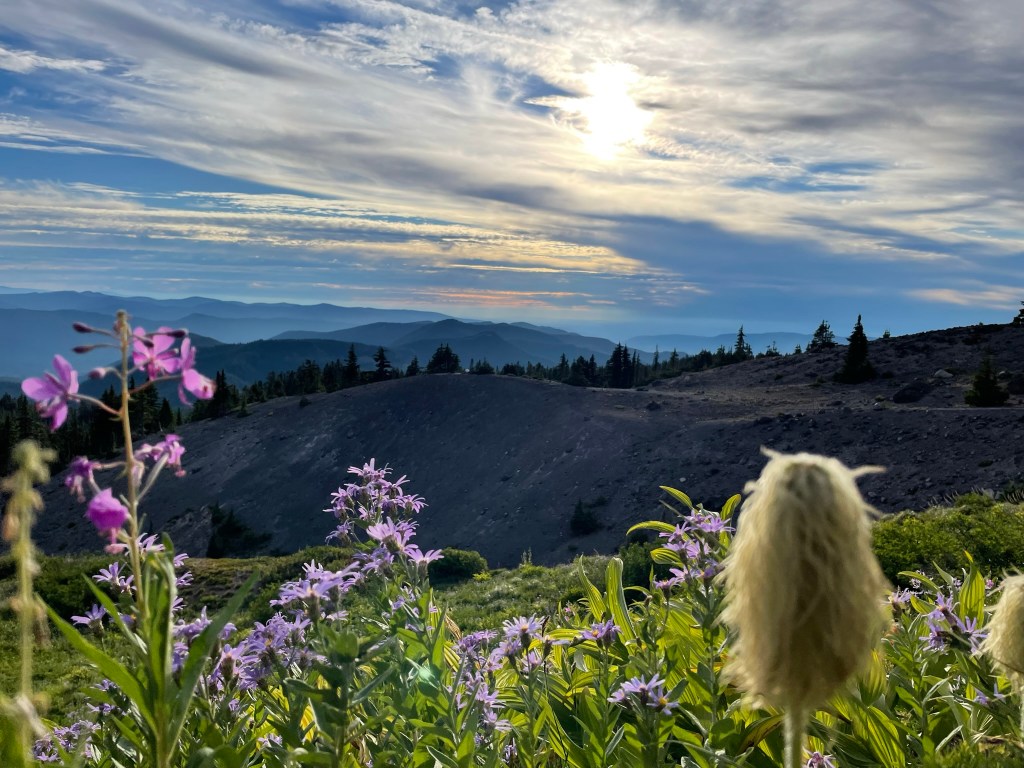
- Spending more time in more natural settings. This can be as simple as going for a walk or a sit but can also include stargazing, forest bathing, creating art, and nature journaling.
- Increasing our direct physical contact with nature (examples include gardening, animal care, camping).
- Engaging in outdoor meditation, creative contemplations, artistic practices, and reveries.
- Creating personal rituals to bring ourselves to greater presence while in the green-blue world.
- Helping with conservation and restoration projects (“Heal the land and the land will heal you”).
Some people choose to engage in more challenging encounters with nature through adventure or wilderness therapy.
Some other ecotherapy practices include ways to bring nature indoors. For example:
- Imitating natural light patterns in our human environment (e.g. lights that mimic natural sunlight, and lighting that provides red light exposure in the morning and evening).
- Incorporating plants or other items collected from nature into your living space (e.g. stones, shells, feathers).
- Playing sounds from nature.
- Hanging or placing pictures from nature. Scenery is more effective when it includes stillness (e.g. a lake or bay) or terrestrial scenery with a degree of openness.
And, the green-blue natural world also provides information, contrasts, and metaphors by which we can normalize and better understand our human experience. An example of the latter is provided in the section below on chronos and kairos.
Example: Contemplating Nature in this Moment—Noticing Yourself
You can engage in creative contemplations while out in nature or at this very moment. As an example, in this moment you can consider that you are really not far from nature at all. After all, the body you inhabit, the heart you feel beating, your lungs that are breathing, your eyes that are seeing, and your brain that is processing all these inputs are all very much a product and part of the natural world! You have a belonging with the green‑and-blue natural world that cannot be denied you.
You can also sit quietly in this moment and bring to mind one of your favorite spots in nature. As you do this, know that whatever is happening in your immediate environment that place is likely little changed from what it was when you experienced it—as it is every day regardless of what you are doing. Bring to mind as many sense memories of that place as you can. Breathing slowly hold an awareness of your present location while you sense and immerse into images and sensations of one of your favorite places in the green-blue world.
For me, there is a certain set of trees along a trail that I like to bring into awareness, knowing that as I sit here writing this, those trees are doing what they do in the forest, just as they do it in every moment of every day regardless of what is going on in my world or the broader human world. This contemplation often brings me a degree of solace in difficult moments.
Example: Increasing Understanding of Our Human Experience—Don’t Let Chronos Run Over Your Kairos
Consideration of natural systems and processes and how our place in them has shifted ove time can help us understand our own emotional experiences. For example, consider the difference between the two concepts of time: chronos and kairos. Chronos is linear time—clock and calendar time. Kairos is things happening when they are ready to happen.

Chronos tells us when we need to arrive at work or school and when we can leave, when we have a doctors appointment, and when the stores will be open and closed. It also tells us when taxes are due and when we have committed to gather with friends and family.
Kairos can be thought of as the right or opportune time. Following Kairos, in the spring, trees bud out when the conditions are right, our relationships deepen when the things that allow that deepening have happened, children separate from parents when the pushes and callings from family and the world tip the scales toward leaving, and we grieve when, bidden or not, the feelings arise within us.
Times of grieving provide an example of the conflict that can arise as we embed human systems governed by chronos within natural systems governed by kairos. Grieving is a very natural process governed by kairos. We experience and move through the stages of grieving when it is right for us. However, the demands of the human world often follow chronos, requiring us to be at work, at school, in the doctor’s office, or with family regardless of whether those activities interfere with our grieving process. When this happens, our grieving process can be overcome, becoming frozen and distorted within us.
When we override the times that are ripe for our grieving, we employ coping mechanisms to allow us to function. When our chronos based obligations end, the transitions involved in dropping the coping mechanisms and returning to our grief can be hard, and over time we may forget to do it. In that case, our grief does not end but goes underground (unconscious) and continues to act within us, freezing some parts of us and causing excess and seemingly unexplainable movement in other parts of us (numbness and depression, or tears and anger at times when they would not otherwise be warranted).
Deep-Time Deep-Self Meditation

Click on the picture below for a 27 minute deep-time deep-self meditation (the first seven minutes are instructional).
Different people find different things in this meditation. Many have shared with me that it has had a lasting effect on them. My hope is that for you this might include an increased sense of connection, belonging, and ultimate safety, along with the joy of a deeper sense of your participation in the unfolding story of the universe.
Many people have a general understanding of theories about how the universe came into existence and coalesced into nebulae, stars, planets, etc.—and how life and humans came into being on this planet. But this understanding is usually primarily intellectual and often does not feel real or connected to our current lives. One of the purposes of this meditation is to move toward developing more of an integrated, bodily-felt sense of the realness of the universe, the unfolding process, and how much a part of it we are.
 Sacred Earth Experience